Documentary recommendation: “Earth’s Greatest Enemy”

The US military burns more fossil fuels than any institution on the planet – more than over 100 countries combined. We can’t stabilize the climate without reducing military emissions, but they are currently exempt from all major international climate agreements. They aren’t tracked and publicized in a transparent way or talked about much either.

We’ve got to change that. One place to start learning about this important topic is with the new documentary, Earth’s Greatest Enemy. It illuminates many of the real-world consequences of vast US militarization for not just the climate, but for air quality, water contamination, human health, and the well-being of living things across the globe.

“Caregivers, Kids, and Carnist Structural Injustice” published

My co-author, Jeremy Fischer, and I just published our latest joint article, “Caregivers, Kids, and Carnist Structural Injustice,” which you can find in the Journal of Applied Philosophy as part of a special issue about food, families, and justice.

This is our second paper about carnist caregiving (that is, caregiving that trains and encourages kids to regularly eat animal products). In it, we argue that existing social structures make it unreasonably difficult or unthinkable for many caregivers to avoid carnist caregiving. We make the case that these caregivers are unjustly induced and/or pressured into carnist caregiving. So justice requires reforming the social structures that systematically prevent caregivers from providing plant-based caregiving for kids.

War Is a Racket Zine

Here’s a zine I made about an absolute classic of an anti-war book, War Is a Racket, which I recommended in my last post.

Feel free to download, print (then cut and fold), read, and share/distribute this zine as you see fit. You might take some copies to pass out at an anti-war rally, or simply drop them in a neighborhood Little Free Library.

If you’re not familiar with how to fold and cut an 8-page mini zine, check out this video for help.

Book Recommendation: War Is a Racket

Possibly the best book about war I’ve ever read is the short, straightforward War Is a Racket, which you can read (or reread) for free at the link provided.

War Is a Racket was by written Major General Smedley Darlington Butler after twice receiving the Medal of Honor and retiring from the US Marine Corps. He knows whereof he writes.

War Is a Racket was first published in 1935, but sadly, there’s never been a moment since when it hasn’t been incredibly timely.

War Is a Racket – enough said.

Chicago Should Enforce Its Energy Benchmarking Ordinance

Kudos to my climate friend, Charlotte, for getting an op-ed published in the local business press about Chicago leaving millions on the table by ignoring its energy benchmarking law.

Here’s the basic gist: in Chicago, about 70% of greenhouse gas emissions come from buildings. Since 2013, the Chicago Building Energy Use Benchmarking Ordinance has required buildings over 50,000 square feet to report their energy usage and emissions data to the city annually.

But the ordinance has never been enforced. That means the city is neglecting to collect millions of dollars in fines every year. And, of course, they’re also failing to collect high-quality data about our progress toward our climate goals and missing out on key opportunities to help folks learn about and implement about cost-saving and emission-cutting measures in big buildings.

So, a bunch of us have been advocating for the city to put money in the 2026 budget to hire an inspector in the Dept. of Environment who can enforce the ordinance. It’s common sense. Whether your main concern is a balanced city budget, averting the worst climate chaos, collecting high-quality data, or just plain old accountability and rule-following, getting the resources in place to enforce the benchmarking ordinance would be a win.

If you live in Chicago, you can use this template to contact your alderperson and tell them that you support enforcing the benchmarking ordinance.

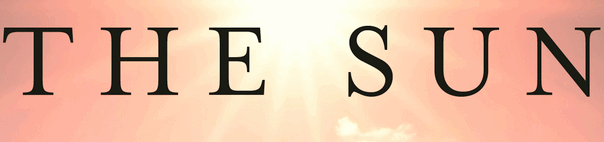
Book Recommendation: Here Comes the Sun

As yearly rhythms bring us back to colder, shorter, darker days, I’m more inclined to curl up with a good book than ever. I do love fall, but I’m definitely feeling tired and yearning for some (literally and figuratively) warmer, brighter days.

If that sentiment resonates with you, may I recommend Bill McKibben’s Here Comes the Sun: A Last Chance for the Climate and a Fresh Chance for Civilization?

This latest book from a stalwart in the climate community is packed with high-quality reporting and research, presented for a very wide general audience. Best of all, the main message is good climate news: we don’t need long-shot, unproven, potentially dangerous technologies to get back on track to a stable climate.

What we need is political will and capital investments in the proven, scalable, clean solar (and wind) technologies that have already started transforming people’s lives for the better all around the globe. Solar power is the cheapest way to generate power, it’s a boon to human physical health, and it’s here to stay. The question is whether we’ll deploy enough of it fast enough to reduce emissions, stabilize the climate, and ensure a livable future for everyone.

For the first time in a long time, the experience of reading a climate-themed book was actually enjoyable for me – I powered my way through this one in two afternoons!

If you do read it, and want to talk about it, Climate Reality Chicago will be having a book club meeting where we discuss it on Tuesday, December 9, at 6:30 PM Central time. If you email me, I’ll be happy to share the link to the Zoom meeting with anyone who would like to join us!

Double Mega Climate Win in Illinois

Just when I was starting to think that there was no such things as good news anymore … At the very end of the Illinois General Assembly’s veto session this week, two major wins for the climate (and for regular folks’ cost-of-living around here) passed.

The Clean and Reliable Grid Affordability (CRGA – pronounced “surge-uh”) Act is an omnibus bill that will lower utility bills and reduce greenhouse gas emissions through efficiency programs, stabilize volatile energy costs by implementing virtual power plant (VPP) programs and by adding 3GW battery storage to the electric grid (so we don’t have to buy energy from the most expensive fossil fuel peaker power plants when demand is high), improve grid reliability by reducing transmission bottlenecks, spur innovation by supporting thermal energy network (TENs) pilots, improve access to data about energy usage and emissions in buildings, and more.

The Northern Illinois Transit Authority (NITA) Act will not just avert a looming fiscal disaster for regional public transit, but it will make investments that are crucial for improving safety, reliability, and comfort for riders. But even folks who don’t use public transit will benefit from the resulting cleaner air, reduced climate pollution, economic and social stability that depends on workers and friends being able to get where they need to go, and reductions in traffic congestion and sprawl.

It took literally thousands of us to make this happen, and I want to personally say THANK YOU to everyone who made a phone call, sent an email, filled out a witness slip, posted on social media, lobbied, mailed a postcard, attended a meeting, talked to a neighbor/colleague/loved one about these efforts, did supporting research, designed a poster, tabled at an event, volunteered at a lobby day, canvassed, hung flyers, or anything else to help!

Our work as activists isn’t over – we still need to implement these new policies, and there’s a lot we can do to build on these successes to get closer to the clean, healthy, stable, affordable, equitable future that we all want and deserve. But for now, kudos to all my climate friends!!

Book Recommendation: Ruin Their Crops on the Ground

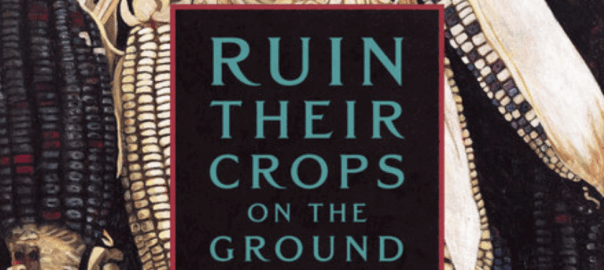
Whether you are a seasoned food justice activist, legal scholar, or just anyone interested in dipping their toes into neglected parts of American history, Andrea Freeman’s Ruin Their Crops on the Ground: The Politics of Food in the United States, from the Trail of Tears to School Lunch is likely to teach you a bunch of things you didn’t already know about food-related policies and their use as tools of control.

The book is written in a really accessible style, with lots of interesting anecdotes from members of impacted communities in their own words. The scholarship uniting those tidbits with the large-scale social/political patterns in which individual lives unfold is pretty impressive.

I was initially drawn to Freeman’s work on milk/dairy, but I’m glad I didn’t stop there – she provided lots of insight about Native foodways, assimilationist pressures on various immigrant communities, and the ways in which slavery and its aftermath were/are intertwined with food policies, among other things!

an image of a colorful cartoon owl holding a beach ball with the words "Summer at CPL"

Upcoming Talk at the CHI Public Library

On Saturday, July 12th, from 11 AM to 12 PM at the Coleman Branch of the Chicago Public Library, I’ll be representing the Chicago Metro Chapter of the Climate Reality Project by giving a talk called, “Reducing Emissions from Chicago Buildings Will Save Money, Protect Health, Create Jobs, and Stabilize the Climate.”

My presentation is part of the adult programming for the Summer at CPL, which includes lots of great activities for folks of all ages. This year’s theme is “Growing Minds, Going Green.”

I’d love to see you there!

(Or give a similar talk for any community group or class who’d like to have me!)

Hooray! Entirely Virtual APA Central Meeting in February

As a member of Philosophers for Sustainability, I’m so excited that our APA 2+1 Campaign is bearing fruit! This February 20-22 & February 27 – March 1, the American Philosophical Association’s Central Division Meeting will be held entirely online, via Zoom.

Among other benefits, the fully virtual conference will:

  • Substantially reduce greenhouse gas emissions (no flying!),
  • Be much more affordable for participants (no hotels or flights to pay for!),
  • Be more accessible to students, folks with various disabilities, health conditions, caring responsibilities, and others (no uncomfortable ballrooms!)
  • Try out new session formats (read-ahead sessions, fully public sessions, optional watch parties for student groups, and more), and
  • Allow for access to recorded sessions for a whole year (finally – I need not miss out when interesting sessions are scheduled concurrently)!

The program has just been published, and a lot of people have put a lot of work into making this fully virtual conference a reality. I’m very grateful to them all.

Let’s make the experiment a success by registering, showing up, participating, thinking critically, and giving constructive feedback en masse!

We’ll be doing one of three annual APA conferences virtually in 2026 and 2027 as well, so we’ve got opportunities to improve based on what we learn this time around. As a member of the Ad Hoc Committee on Virtual Meetings, I know that I’ll be giving a lot of thought to this, so feel free to get in touch with me if you’ve got ideas we should consider trying.