Category Archives: climate

Chicago Should Enforce Its Energy Benchmarking Ordinance

Kudos to my climate friend, Charlotte, for getting an op-ed published in the local business press about Chicago leaving millions on the table by ignoring its energy benchmarking law.

Here’s the basic gist: in Chicago, about 70% of greenhouse gas emissions come from buildings. Since 2013, the Chicago Building Energy Use Benchmarking Ordinance has required buildings over 50,000 square feet to report their energy usage and emissions data to the city annually.

But the ordinance has never been enforced. That means the city is neglecting to collect millions of dollars in fines every year. And, of course, they’re also failing to collect high-quality data about our progress toward our climate goals and missing out on key opportunities to help folks learn about and implement about cost-saving and emission-cutting measures in big buildings.

So, a bunch of us have been advocating for the city to put money in the 2026 budget to hire an inspector in the Dept. of Environment who can enforce the ordinance. It’s common sense. Whether your main concern is a balanced city budget, averting the worst climate chaos, collecting high-quality data, or just plain old accountability and rule-following, getting the resources in place to enforce the benchmarking ordinance would be a win.

If you live in Chicago, you can use this template to contact your alderperson and tell them that you support enforcing the benchmarking ordinance.


Book Recommendation: Here Comes the Sun

As yearly rhythms bring us back to colder, shorter, darker days, I’m more inclined to curl up with a good book than ever. I do love fall, but I’m definitely feeling tired and yearning for some (literally and figuratively) warmer, brighter days.

If that sentiment resonates with you, may I recommend Bill McKibben’s Here Comes the Sun: A Last Chance for the Climate and a Fresh Chance for Civilization?

This latest book from a stalwart in the climate community is packed with high-quality reporting and research, presented for a very wide general audience. Best of all, the main message is good climate news: we don’t need long-shot, unproven, potentially dangerous technologies to get back on track to a stable climate.

What we need is political will and capital investments in the proven, scalable, clean solar (and wind) technologies that have already started transforming people’s lives for the better all around the globe. Solar power is the cheapest way to generate power, it’s a boon to human physical health, and it’s here to stay. The question is whether we’ll deploy enough of it fast enough to reduce emissions, stabilize the climate, and ensure a livable future for everyone.

For the first time in a long time, the experience of reading a climate-themed book was actually enjoyable for me – I powered my way through this one in two afternoons!

If you do read it, and want to talk about it, Climate Reality Chicago will be having a book club meeting where we discuss it on Tuesday, December 9, at 6:30 PM Central time. If you email me, I’ll be happy to share the link to the Zoom meeting with anyone who would like to join us!

Double Mega Climate Win in Illinois

Just when I was starting to think that there was no such things as good news anymore … At the very end of the Illinois General Assembly’s veto session this week, two major wins for the climate (and for regular folks’ cost-of-living around here) passed.

The Clean and Reliable Grid Affordability (CRGA – pronounced “surge-uh”) Act is an omnibus bill that will lower utility bills and reduce greenhouse gas emissions through efficiency programs, stabilize volatile energy costs by implementing virtual power plant (VPP) programs and by adding 3GW battery storage to the electric grid (so we don’t have to buy energy from the most expensive fossil fuel peaker power plants when demand is high), improve grid reliability by reducing transmission bottlenecks, spur innovation by supporting thermal energy network (TENs) pilots, improve access to data about energy usage and emissions in buildings, and more.

The Northern Illinois Transit Authority (NITA) Act will not just avert a looming fiscal disaster for regional public transit, but it will make investments that are crucial for improving safety, reliability, and comfort for riders. But even folks who don’t use public transit will benefit from the resulting cleaner air, reduced climate pollution, economic and social stability that depends on workers and friends being able to get where they need to go, and reductions in traffic congestion and sprawl.

It took literally thousands of us to make this happen, and I want to personally say THANK YOU to everyone who made a phone call, sent an email, filled out a witness slip, posted on social media, lobbied, mailed a postcard, attended a meeting, talked to a neighbor/colleague/loved one about these efforts, did supporting research, designed a poster, tabled at an event, volunteered at a lobby day, canvassed, hung flyers, or anything else to help!

Our work as activists isn’t over – we still need to implement these new policies, and there’s a lot we can do to build on these successes to get closer to the clean, healthy, stable, affordable, equitable future that we all want and deserve. But for now, kudos to all my climate friends!!

an image of a colorful cartoon owl holding a beach ball with the words "Summer at CPL"

Upcoming Talk at the CHI Public Library

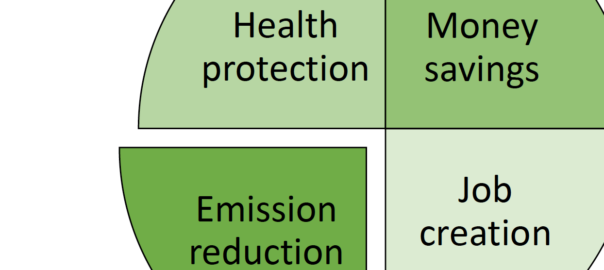
On Saturday, July 12th, from 11 AM to 12 PM at the Coleman Branch of the Chicago Public Library, I’ll be representing the Chicago Metro Chapter of the Climate Reality Project by giving a talk called, “Reducing Emissions from Chicago Buildings Will Save Money, Protect Health, Create Jobs, and Stabilize the Climate.”

My presentation is part of the adult programming for the Summer at CPL, which includes lots of great activities for folks of all ages. This year’s theme is “Growing Minds, Going Green.”

I’d love to see you there!

(Or give a similar talk for any community group or class who’d like to have me!)

Hooray! Entirely Virtual APA Central Meeting in February

As a member of Philosophers for Sustainability, I’m so excited that our APA 2+1 Campaign is bearing fruit! This February 20-22 & February 27 – March 1, the American Philosophical Association’s Central Division Meeting will be held entirely online, via Zoom.

Among other benefits, the fully virtual conference will:

  • Substantially reduce greenhouse gas emissions (no flying!),
  • Be much more affordable for participants (no hotels or flights to pay for!),
  • Be more accessible to students, folks with various disabilities, health conditions, caring responsibilities, and others (no uncomfortable ballrooms!)
  • Try out new session formats (read-ahead sessions, fully public sessions, optional watch parties for student groups, and more), and
  • Allow for access to recorded sessions for a whole year (finally – I need not miss out when interesting sessions are scheduled concurrently)!

The program has just been published, and a lot of people have put a lot of work into making this fully virtual conference a reality. I’m very grateful to them all.

Let’s make the experiment a success by registering, showing up, participating, thinking critically, and giving constructive feedback en masse!

We’ll be doing one of three annual APA conferences virtually in 2026 and 2027 as well, so we’ve got opportunities to improve based on what we learn this time around. As a member of the Ad Hoc Committee on Virtual Meetings, I know that I’ll be giving a lot of thought to this, so feel free to get in touch with me if you’ve got ideas we should consider trying.

10 Haiku for My Portable Induction Burner

You heat stuff so fast
I need not practice patience
Induction burner

Unmatched cooking speed
No hunger emergency
Dinner is ready

When I must clean you
A simple wipe is plenty
Induction burner

Steadfast excellence
Energy efficiency
We venerate you

Magnetic power
Awesome induction burner
A wonder machine

My budget is tight
A hundred dollars well spent
Induction burner

No yucky odors
Nor invisible poisons
You protect our health

Induction burner
You came with us when we moved
Renters’ trusty friend

A dish cloth or hand
Brushes your hot surface but
They do not get burnt

Like something magic
The future is induction
Just imagine it

Video: Reducing Emissions from Buildings in Chicago

Since about 70% of all greenhouse gas emissions in Chicago come from our buildings, I’ve been leading a small team of Climate Reality Project volunteers with the goal of helping bring those building emissions down over time. That will take lots of work, but thankfully, we’ve got many wonderful coalition partners at the Illinois Clean Jobs Coalition (and the clean buildings working group in particular)!

Last week, my teammates and I gave a presentation to the general membership of Climate Reality’s Chicago Metro Chapter about what building decarbonization is, why it is so important, what our team has accomplished over the last year, and the projects we’ve currently got in the pipeline. Consider taking a look at that presentation, and let me know if you want to get involved or form some sort of partnership with our team!

(The main presentation starts about 10 minutes in – after some intro material from our chapter chair.)

Chicago Higher Education Buildings Need to Decarbonize

Recently, my team over at the Climate Reality Project’s Chicago Metro Chapter released a report that draws connections between existing citywide energy benchmarking policies and climate goals, energy usage and emissions on college and university campuses, and strategies for working toward emission reductions. 

Check out the report “Addressing Greenhouse Gas Emissions on Chicago Campuses” or just get the highlights through the coverage by Illinois PIRG and The Columbia Chronicle.

Addressing Greenhouse Gas Emissions from Chicago Campus Buildings: A Report

With about 70% of climate-destabilizing greenhouse gas emissions in Chicago coming from buildings, it is important to know which ones are among the highest emitters, so that we can make the changes necessary to meet the goals in Chicago’s Climate Action Plan

As I learned while working with my team at the Climate Reality Project’s Chicago Metro Chapter, university buildings are among Chicago’s top emitters of climate-warming gasses per square foot. Seven university buildings ranked among the top ten most emissions intensive buildings in the city in 2021!

We recently released a report, Addressing Greenhouse Gas Emissions on Chicago Campuses, which relies on data from electrifychicago.net. That website allows users to get specific, publicly available energy usage and emissions information for individual large buildings that owners are required to report to the city under the Chicago Energy Benchmarking Ordinance. The website also helps users rank and group buildings to allow for better understanding of the data.

Using that excellent resource as a starting place, we identified a number of college and university campus buildings that are making outsize contributions to the climate crisis, as well as multiple institutions of higher education that have failed to comply with the benchmarking ordinance in recent years. We also uncovered a systemic failure on the city’s part to enforce the ordinance – foregoing as much as $30 million in potential fines.

We issued the report to spur universities to decarbonize their buildings by improving energy efficiency and by moving away from fossil fuels like methane gas. The report also highlights actions at the state and city level to reduce greenhouse gas emissions and provides strategies for students and others concerned about climate change to work toward emission reductions.

The Climate Reality Project’s Chicago Metro Chapter is an all-volunteer group of Chicago area activists working to catalyze local solutions to the climate crisis since 2017.

Moral Courage, Environmental Style

Around the country, professors are hard at work creating and updating syllabi for fall, which can be both exciting and exhausting. Thankfully, Philosophers for Sustainability is here to help!

They’ve just posted a new section on their website, called Teaching Modules, with resources that can easily be slotted into existing courses, used to create new courses, or shared and discussed in philosophy clubs.

The first module is called “Moral Courage, Environmental Style,” and it contains a bunch of materials to accompany an article I published (gulp, 10 years ago) called “Courage as an Environmental Virtue.” We’re talking: a 15-minute summary video made by yours truly, a set of slides, an hour-long video conversation between myself and Dr. Nora Mills Boyd, video transcripts, discussion questions, activity prompts, and a list of related resources.

These free materials may be particularly useful in courses that discuss virtue ethics, activism, sex & gender norms, courage in military contexts, and climate change.

I had a lot of fun working with both Nora and Sadie Warren on this project and I’m hoping that this module will be the first of many shared there, so if you have an idea or a request for other materials of this general sort, please don’t hesitate to reach out to Nora at nboyd@siena.edu.